Sunday, November 14, 2010

It's all about money

Since economic crisis on 1997, it slowed the health status of Indonesians development health system. The crisis started in Thailand with the collapse of its baht when speculators attacked the floated currency in 1997. Foreign banks began calling in their loans to Korea. The Indonesian rupiah plunged abruptly under attacks from both banks and speculators. Then came the IMF with a series of bailouts. It offered a total $40 billion program to stabilize the three currencies, but did little to rescue the plunging economies. 

  Ya, its sound so easy that the IMF easily give loan with certain huge amount of money, but it is actually comes with policies. 
Structural Adjustment Policies generally require a country to:

  • slash government spending, which usually means cutbacks for health care, education, child care, and environmental protection; 
  • attract foreign investment by removing tariffs and weakening labor laws and environmental protections; 
  • sell off publicly owned assets such as mines, mills, forests, telephone, water and electricity companies-a process known as ~privatization" 
  • focus resources on growing export crops for industrial countries, rather than supporting family farms and growing organic food for local consumption; and 
  • devalue the currency to promote exports.


    "Now, we are dictated by the IMF and The World Bank. A country as rich as Indonesia has been turned into a country of beggars"... quoted from this video 2:07-2:15 minit


    Unfinished Agenda
    The Government of Indonesia is taking special steps to protect the health of its population through the modification of its Seventh Five-Year Plan (Repelita VII), but the pace of progress in solving health problems has been slow. The health status of Indonesia still lags behind neighbouring countries. Maternal mortality in particular is very high at 334 per 100,000 live births (1997). Moreover, national figures mask considerable regional disparities in health indicators. For example, the infant mortality rate ranges from 27 per 1000 live births in Jakarta to 90 in West Nusa Tenggara(1998).


    The period 2001-2005 witnessed significant changes in Indonesia. The political and socio-economic decentralization process initiated in 2000, has had a tremendous impact on the national health system. Provinces and districts now develop and budget their own health plans independently with funds they generate themselves and with funds they receive from the Ministry of Finance. This arrangement had considerably weakend the unified national health system including the once well established disease surveillance system as well as other public health programmes.

    New challenges have emerged as a result of social
    and economic changes. From World Bank report "Improving Indonesia's Health Outcome", they come out with certain problems that deteriorate Indonesia's health system


    • disease pattern has become more complex
    • important regional and socioeconomic inequities 
    • performance and utilization of public health services is declining and private sector now is the major source 
    • health financing low 
    • decentralization poses new challenges and presents new opportunities 
    • HIV/AIDS transmission rates are increasing but the epidemic remains largely localized 
    Point of view
    Isn't it sounds contradiction between the policy of IMF loans and reports from the World bank? they stated that if you want to borrow money from the IMF you need to cut down money spending in health, decentralization and privatization. Ironically, report from world bank stated that those things that causes problem in health system.

    Actually, decentralization have it owns benefit because decisions are made by those who have the most knowledge about local conditions and most important. Ok, let me define what decentralization means. It is a delegation of decision-making to the subunits of an organization. It is a matter of degree. The lower the level where decisions are made, the greater is the decentralization. Decentralization is most effective in organizations where subunits are autonomous and costs and profits can be independently measured. But, sometimes, things don't work accordingly to the plan. It can cause by the manager that have a tendency to look at their division and lose sight of overall company goals and also there can be costly duplication of services. Its all about the management matter.


    Privatization means the sale of public utilities to private concerns. Supporters of privatization often cite the competitive environment that is nourished by the practice as a key to its success. But how with poor people? richer people get better services while poor people even don't have money to pay for services.


    In our life's, there is yin and yang, have male and female, and of course have pros and cons. Governments not simply make a policy without thinking about their citizen. They do the research, ask from expertise, from other countries which has been implemented the same policy but it's all about the good governance and clean government


    Refferences 


    Saturday, November 13, 2010

    Cultural Aspect in Medicine 2 : do you eat petai?

    The Republic of Indonesia, with 300 ethnic groups speaking 350 languages which spread over the 17,000 islands, is located between Asia and Australia. There are five major islands: Sumatra, Java, Kalimantan, Sulawesi, and Irian Jaya or Papua bordering with Papua New Guinea. Two remaining groups of islands are Maluku and Nusa Tenggara, running from Sulawesi to Papua in the north and from Bali to Timor in the south. Other islands are small and mostly uninhabited. More than 80 percent of Indonesia’s territory is covered with water world,

    The large number of islands and their dispersion over a wide area has given rise to a diverse culture and hundreds of ethnic groups, each with its own language, though the national language, Bahasa Indonesia, is a unifying factor.


    Cultural background influences patients’ interpretation of illness, health, health care, and the manner in which they relate to medical care providers, and the own cultural background influences the way for interpreting the patients disease and treatment. In order to incorporate the patients’ perspective into the care provide, doctors need to appreciate the patient’s view of and approach t medical care.


    Why we do care about patient perspective in illness? because it may have an influence on the choice of coping strategies and decision making. Usually, elderly hate to go to hospital, because what in their mind is they will be injected with huge syringe. Some will concern more about side effects and more believe in natural remedies. 


    There is some research by Dr.Aminuddin AHK Dept.of Physiology from Medical faculty of UKM Kuala Lumpur about Petai. From the research, petai really is a natural remedy for many ills. When you compare it to an apple, it has four times the protein, twice the carbohydrates, three times the phosphorus, five times the vitamin A and iron, and twice the other vitamins and minerals. It is also rich in potassium and is one of the best value foods around. So maybe its time to change that well-known phrase so that we say , 'A Petai a day keeps the doctor away'. It has been proven by a research. How about your perspective in it, dare to eat petai??


    shrimp, petai and nyum nyum...


    Alternative medicine
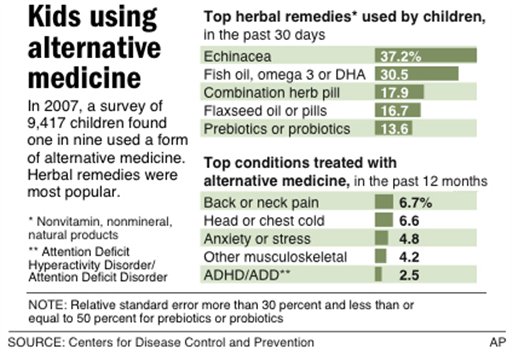
    Alternative medicine is a term given to approaches that differ from more mainstream and conventional medical practices. Most often you will hear conventional medical practices referred to as Western Medicine. Alternative medicine, on the other hand, is a fairly broad umbrella term which covers many different methods of treatment such as acupuncture, homeopathy, Chinese herbal medicine, and Ayurvedic.

    The main difference between so-called alternative medicine and conventional medicine is that the latter is too concerned with treating the symptoms of disease by scientific techniques and technology instead of treating the whole person and the cause of disease. On the other hand, alternative medicine puts much emphasis upon the prevention of disease , and seeks to treat the whole person so as to strengthen the immune system to bring about a sustained healing.

    Yet, many ancient practices as Chinese, water treatment, herbal remedies, massage and Ayurveda (Indian medicine believed to be the oldest and most complete medical system) are still being practised with great results; and, in recent times, other systems also based upon the ancient forms of natural healing have emerged. These include such therapies as homeopathy, osteopathy, chiropractic, aromatherapy, nutritional medicine, naturopathic, and many other natural therapies that have proved to support the natural healing function of the body with excellent results.


    Medicine in my perspective
    For me, I wanna know what cause me to have a disease. Sometimes if you feel something goes wrong with your body, and then go to see a doctor, and they just prescribe you a symptomatic medicine. After waiting for couple of hours, and only see patients for only not more than 5 minutes, and some not even actively listening what  patients said, for me, its better to just buy medicine in pharmacy. Sometimes doctor will prescribe many drugs and when I checked it with MIMS or www.drugs.com, it actually to be prescribed in severe disease. 
    Its better for a doctor to have a good communication with patients, because when patient trust in us, believe in what we prescribe, feel comfortable to talk with us, it can relief or cure a disease. One story that I heard from my friends, she told that an old woman having a diarrhea then she consumed drugs but it doesn't work, but then when she consumed herbs and leaves, she feel better. For us who studying medicine and knows the pathophysiology, the onset of drugs, how it interact with our body, so it is ok. But how with people who doesn't learn about this. They will think otherwise...


    The essence in medical practice is relationship between doctor-patient


    Medical practice is performed based on patient’s-doctor’s mutual belief and agreement.

    Which one to choose?? It is all about your believe ~


    Friday, November 12, 2010

    RM 6000??? Wow!!!


    Malaysian doctors, particularly houseman officers (HO) will enjoy a new salary revision which will also see automatic grade promotion upon the completion of 2-year housemanship beginning 2010. The new salary scale will effectively convert into the doubling of the present salary scale. From The Star news:

    PUTRAJAYA: At least 2,000 graduate house officers in government hospitals will get an automatic promotion to grade UD44 upon completion of their two-year housemanship in 2010. They will be getting at least RM6,000 including allowances every month, which is almost double what the present graduate house officers are getting on grade UD41.

    Health director-general Tan Sri Dr Ismail Merican said the promotion exercise would cost RM1.7mil annually. He added that at least 7,000 doctors on grades UD41 and UD44, who were appointed before 2008, would also get their long overdue promotions. This would cost another RM9.8mil. He said many doctors had been stuck at UD41 for six to seven years and that they would be moved to the higher scale of UD44.

    “Hopefully, this promotion exercise will indirectly encourage many doctors to remain in the civil service,” he said.

    Dr Ismail denied allegations by certain parties that there were not enough opportunities for other races compared to Malays in the medical sector. He said that from 2000 to February this year, there were 2,085 specialists of whom 56% were Malays, Chinese (23.7%) and Indians (19.3% ). He said 55% of the specialists on grade UD48 were Malays, 23% Chinese and 18.2% Indians. As for UD54, it was 58% Malay, 21% Chinese and 16% Indian.

    Of the specialists under special grade C, he said 51.1% were Malays and Chinese and Indians made up 24% each. As for those under special grade B, he said that 42% were Malays with the Chinese and Indians making up 24% and 34% respectively. – The Star.

    While most doctors and the wannabe-doctors will welcome this news with open arms and tearful joy, few others are still reeling from the adverse psychological effect of being a health practitioner. I guess it is probably true that a doctor’s job (particularly housemanship officers) is the one of the most stressful jobs around. Yesterday, a suicidal doctor tried to take her own life by threatening to jump from the 6th floor of Alor Star Hospital.


    ---------------------------------------------------

    Story up there is a real story telling about a strees doctor in Malaysia and also about the payment. So, is there any relatioship between money and stress?? or stress vs workload vs payment. 


    Appropriate provider payments is needed optimize the utilization of scarce health care resources, transform clinical practice, and improve the quality of care. Most public hospitals in developing countries are financed through budget allocations that are not directly related to the amount and quality of health care services they provide.


    Serving in remote areas in deve loping countries constitutes a personal hardship for physicians, who must forego income from private practices they could establish in urban areas as well as educational and other opportunities for their children. As a result, premiums for enticing physicians to serve in those areas must be high.


    There is a study showed that in Indonesia, bonuses of as much as 100% of salary would be necessary to attract graduates from Jakarta to the outer islands, but that bonuses is  little as 30% were required to attract physicians originally from remote regions to return there to practice after finishing medical school.


    So, Indonesia have compulsory a service requirements in outlying areas for new physicians. This system helps staff the outer clinics at low cost, but does so usually at the expensive of a quid pro quo from the government, such as free tuition in public medical school, guaranteed placement in the civil service, or specialist training, that carries larger efficiency costs than direct cash subsidies to physicians.


    Those down here are method of Provider payment but which one is better, still can't be answered

    Methods of Provider Payment
    1. Salary
    • Monthly payment for a medical doctor without considering amount of members
    • Medical treatment not influenced by economic incentives
    • Easy to plan and budget
    2. Fee-For-Service (FFS)
    • doctor are paid based on service provided 
    • market forces mechanism
    • difficult in making standard of fee
    • doctors happy because of the income depends on productivity
    • increase patient satisfaction
    • result - over treatment / inappropriate treatment, health risks to patient may be increased
    3. Capitation
    • Payment by insurance company to health providers for services they deliver whether the amount is not based on type and or amount of health services provided but based on the number of members
    • e.g : In Puskesmas A, it is assign to provide health services for 5 00 populations, and is is estimated that for each person to have treatment in Puskesmas A, they will be charged Rp 10k per month, so the doctor will get 5 00 x 10 000 = Rp 5 000 000 per month
    • there is risk selection (avoid the old abd the sick)
    • under-provide services
    • Increased refferals
    4. Case/Episode 
    • Diagnosis Related Group DRG - Hospitals charge FFS. Governement pays hospitals based on subvention piece-rate formula. It tend to increase number of cases, decrease services per case, cream skimming( select less severe cases to treat or avoid handling resource-intensive cases). Prospective payment system. e.g : Jamkesmas only pay Rp 300 000 for case typhoid, but if that doctor in hospital A over diagnosed using inappropriate diagnostic tool and it cost around Rp 500 000, so that hospital need to bear Rp 200 000 by itsel
    • Casemix - directly proportional to intensity of resources use
    5. Other (e.g Per Diem, Global budget)
    • Per Diem - specific amount of money that an organization allows an individual to spend per day, to cover living and traveling expenses in connection with work. It is the allowance given to the doctor for completing a task or going on tour away from home. Increase length of stay (LOS) 
    • Global budget - fixed maximum budgets or expenditure  targets for health care spending. Specific definitions vary depending on the types of services covered and the systems to which the budgets are applied. Typically set by government, for a defined set of health-care services. The size of the budget may be set by an assessment of projected health needs or determined relative to an objective metric  (such as a proportion of gross domestic product). Institutional providers such as hospitals may be given individual budgets each year and be required to work within them. If other individual providers like physicians are paid fee-for-service, additional means may be needed to limit spending for those services.   
    Who bears the risk?


    Conclusion
    Basically there are two types of
    1. patients 
    • healthy - Non-altruist doctors happy to get healthy patient but altruist doc will be more satisfied to have frail patient.
    • frail - Altruistic physicians under-serve frail patients under both fee-for-service because they can ask that non healthy patient to do a lot of unnecessary diagnostic test and prescribe excessive treatment. While non-altruists doctor try to avoid this patient
    2. physicians 
    • altruists - choose to be paid under FFS,derive non-pecuniary benefits from treating frail patients
    • non-altruists - choose to be paid under capitation scheme, indifferent about the types of patients whom they treat

    Refferences

    2.http://skorcareer.com.my/blog/new-salary-malaysia-doctors-rm6000/2008/03/11/

    Wednesday, November 10, 2010

    Cultural aspect in Medicine 1 : Lone Ranger

    Lone Ranger
    Being a lone ranger is a challenging task. As an outsider, you need time to squeeze in a new setting --> food, place, people, culture, language and also to mix around with the origin people.  Fortunately I'm stranded in Jogja, which all those things that I mention is not really different from my country but still there are. 

    Each of us has a cultural background, although some are more mixed that others. Our friends, neighbors, coworkers, and patients also have their own cultural backgrounds. Cross-cultural interaction occurs when two cultures come into direct contact with each other. Ok, what is a culture? there are a lot of definitions. 
    • systems of meaning, belief, knowledge and action and how people organize their lives
    • man-made of the environment
    • set of ides, concept, rules transmitted socially from one generation to the next and regulate people's lives and society
    • set of belief or behaviours, art, morals, law, customs or capabilities shared by a group 


    Mostly Indonesian people will communicate in bahasa, so there is no problem with it. But, it will make a  huge problem when come to elderly, because they usually talk in Java, and for sure I don't understand. Let me explain a little bit about this language. It has 3 level which are : 
    1. Ngoko is informal speech, used between friends and close relatives. It is also used by persons of higher status to persons of lower status, such as elders to younger people or bosses to subordinates.
    2. Madya is the intermediary form between ngoko and krama. An example of the context where one would use madya is an interaction between strangers on the street, where one wants to be neither too formal nor too informal.
    3. Krama is the polite and formal style. It is used between persons of the same status who do not wish to be informal. It is also the official style for public speeches, announcements, etc. It is also used by persons of lower status to persons of higher status, such as youngsters to elder people or subordinates to bosses.


    Javanese people is polite, and yup, it is true. Something that I found out in Indonesian people that they don’t like people hands on hips during conversation since this is considered impolite/insulting, don’t do impolite things in sacred places, don’t put your feet up on tables or chairs, or use them to point with, don’t be angry when someone on the same sex holds your hands or walks arm to arm, it’s the Indonesian way of showing a friendly relationship and there a lot of things. I'm pretty sure that some of your culture habit is contradict with others culture. Well, it is just a variation in life and we must respect each other even for our point of view it is funny or silly.
    with Javanese guy wearing a traditional java clothes (during 1st year)

    Medical Student in Jogja
    Because of the unique relationship between the doctor and the patient, it is essential to find an effective way to communicate across cultures. While language differences are a significant barrier to effective communication between doctor and patient, cultural differences go far beyond this initial hurdle. 

    Before this, I have experience in Puskesmas, and when the doctor anamnesis patients, i can't understand what are they talking about. It is like duck talking with chicken, language is alike but totally different. So, lets learn basic Java language because one day whether I like or not, I still need to go to rural area as a Koas student.


    Some tips for you and me when communicate with someone with different culture

    • use short, clear simple sentences
    • speak at normal speed
    • confirm comprehension by asking " What do you understand?" rather than "do you understand?"
    • do not raise your voice, they can hear you
    • avoid humour
    • be patient and do not interupt
    • respect differences, do not judge others based on style of speaking or accent
    • if you are angry, try to calm down before listening
    • empathize with what the other person may be thinking or feeling
    • listen to understand rather than reply, try to help the speaker feel at ease.

    Monday, November 8, 2010

    Phases of disaster


    • Pre-Disaster Phase - where they will receive warning, need to "menungsi". how they perceived threats depends on many factors. For example, Merapi eruption on 2010 is beyond people expectation, for 100 years, there is no huge eruption and it was the first time volcanic ash reach till 35km from Merapi. Based on experience before, they perceived Merapi eruption same like before so some of them reluctant to move from their house
    • Impact Phase. The greater the scope, community destruction, and personal losses associated with the disaster, the greater the psychosocial effects.
    • Heroic Phase - at the begining, we can see that people around the world (if it is a mass disaster) enthusiastic to help victims. Sometimes, donation not meet victims desire and can cause problem in waste disposal which can create new problem.
    • Honeymoon Phase - Occurs in the following weeks and months where survivors feel a short-lived sense of optimism.
    • Disillusionment Phase - Over time, survivors go through an inventory process where they recognize the limits of available disaster assistance, where survivors are coming to grips with reality of their situation. Certain trigger events, such as the anniversary of the disaster, can prompt survivors to re-experience negative emotions related to the disaster.
    • Reconstruction Phase, survivors experience setbacks and work through their grief, eventually readjusting to their new surrounding and situations. They will build new house, find new work ---> start a new life with new hope!!!!

    Anniversary Reaction
    So, basically that is about phases of disaster. What I wanna highlight here about anniversary reaction. Anniversary reactions are a re-triggering or re-experiencing of a traumatic event that occurs because of a time cue. A time cue can be anything that was associated with the time that the trauma occurred, from the season of the year, to a particular day, date or hour. While "anniversary reactions" relate to a specific time, other cues can cause a person a re-triggering or re-experiencing, such as disturbing news reports about trauma.

    A Survivor's Story
    What is so frustrating for survivors of trauma, is that an "anniversary reaction" can occur even if they are not consciously aware of the current date, day or time. A survivor called Ashley*, shared her story of an anniversary reaction:


    My father and I went to the market every Saturday morning. We would joyfully share this time of being with each other, talking and shopping. But then my whole life stopped. My father was shot and killed by a stray bullet when some gang members came in to rob the store we were in. I was only 14. My whole life changed for the worse.


    "It has been five years now and I am 19. Still on Saturday mornings, even when I am not paying attention to what day it is, I feel an unease inside. Often I begin to have thoughts of missing my father and feeling sad. Then I think to myself, 'What day is this?' and sure enough it is Saturday. I have been to several therapists who have told me that my grieving is 'incomplete' and once I adequately deal with the trauma and grief, these feelings will go away. But after five years and lots of therapy, it had gotten less intense, but the feelings had not gone away. I didn't give up though, I went to a couple more therapists and asked for a new approach."


    There are several points in Ashley's story that are important for survivors to understand. Anniversary reactions can be persistent and troublesome. They can occur even when you are not aware of the time. Although Ashley was in therapy and trying to deal with her grief and trauma, it did not seem to alleviate this particular reaction. Ashley did not give up however, determined to find a way to cope with her feelings she went to a couple more therapists until she found a helpful approach. Ashley, now 20 years old, continues her story:


    "My therapist asked me a lot of questions to help me express and understand my feelings. She asked me how I wanted to feel about Saturday mornings. I realized that I did not want to give up my special memories of the times my father and I had on Saturday mornings. I just didn't want to think of the trauma, the shooting, the blood and his death. I began doing things on Saturday mornings to honor his memory and change my feelings for Saturday mornings to a positive experience, like it was for so many years. It wasn't immediate, but little by little the positive experiences and feelings became stronger than thinking about the trauma. I was finally able to control my thoughts about it. Sometimes, although rarely, the images of that horrible day flash in my mind. I tell myself that I don't choose to think about it and distract myself to other activities. Some Saturdays I go out with my friends and don't even think about it. Other times I look at old pictures and laugh about the many happy times my father and I shared. I can now choose how I want to spend the day."

    most victims will have mental health problem... it depends on how we manage it


    Sunday, November 7, 2010

    Foundation Piling Components


    A foundation piling system in which pilings are used to support a foundation system in soil having a varied composition and moisture content. The pilings extend into concrete grade beams forming a portion of a monolithic system including a concrete slab. Flanges extend from the end portions of the pilings that are disposed in the grade beam and a plurality of horizontally extending reinforcing bars extend through openings in the flanges.

    If we wanna build houses or building, we need a basic foundation, obtain the tensile strength required, to survive handling and driving, and to provide sufficient bending resistance. Same goes in Health system, need a concrete and strong basic foundation to set up Hospital. 


    WHO’s definition of health system: “comprising all the organizations, institutions and resources that are devoted to producing health actions and include provision and consumption of traditional and complementary medicine (TCM) and Health awareness campaign.

    Pillars/Subcomponents of hospital (WHO Indonesia)
    1. Human Resources 
    According to WHO, the health workforce includes not only clinically trained health professionals but also nonclinical health management and support workers. They serve in both the public and private sectors. Each country has different workforce needs, which will have to be estimated while taking into consideration the limitations of range, skill mix, and demographics of the currently available workforce.

    Doctors, nurses, hospital attendants, technologists, clinical assistants and pharmacists are directly involved in providing OPD and ward care, administration, public relation, security, catering, laundry, electronics, civil, electrical and air conditioning maintenance are involved in supporting the former for providing safe health care. Planning needs to be done for all these personnel and not only for the direct caregivers.

    How to improv it is by improving work system to get co-operation and collaboration among all employess, do employee education, training and development and also important to make employee satisfied 

    Most Recommended Health Workforce Indicator
    • WHO has found that minimum of 2.3 physician, nurses and midwives per 1 000 population are needed to meet 80% coverage of skilled bith attendance (SBA) and other research cite quite similar, 2.5 (Chen, et al. 2004: WHO, 2006a)
    • Distribution of health workforce. the goal would be to decrease disparities in density per capita per X population across measurement units.
    • Domestic education of healt proffesional 
    • indicator to monitor national workfirce management
    2. Health Information System  A combination of health statistics from various sources, used to derive information about health status, health care, provision and use of services and health impact Informatics Hospital information system. A system that provides information management features that hospitals need for daily business Features Pt tracking, billing and administrative programs; may include clinical features

    3. Health Financing 

    According to WHO, the purpose of health financing is to “make funding available, as well as to set the right financial incentives to providers, to ensure that all individuals have access to effective public health and personal health care” (WHO, 2000). This building block is essential for the operation of a national health system – if financing were to fail, no health promotion or disease prevention would be able to take place.


    Health financing refers not only to funds coming from the government but also to funds spent by individuals on their health care (out-of-pocket expenditures) and funds coming from and managed by the private sector, such as employers and insurers. In developing countries, additional funds come from donors and are either administered by donors themselves or given to the government or a private institution to be administered as they do their own funds. Donor funding is not a sustainable source of funding in the long term, so health system plans should include increasing domestic spending on health to eventually bridge the gap currently covered by donor funds. In the short term, increasing the diversity of international donors is important to protect against unexpected discontinuation of funds (WHO, 2007).


    4. Health Information
    A good information system has four main functions : to generate, compile, analyze and synthesize, and communicate and use health data, it aims to help in the decisionmaking process (WHO, 2008).  Their main objective is to produce information for improved health services and evidence-based policy decisions that will lead to improvements in the health status of the population. Although they do not directly improve or reduce health status, reliable and timely health information is an essential foundation of public health action and health systems strengthening, both nationally and internationally. Information is therefore used as a management and oversight tool to improve outcomes through the analysis of changes in outcomes, as well as the processes and capacity being applied to achieve the outcomes (Perrin, et al., 1999).

    5. Health Services delivery
    WHO defines service delivery as the way inputs are combined to allow the delivery of a series of interventions or health actions (WHO, 2001a). Service delivery is the main function the health system has to perform, and it is often thought of as the only function of a health system. Service delivery is an immediate output of the inputs of the other building blocks, such as health workforce, medical products, and finances (Islam, 2007).
    Measures of service delivery outputs include access, utilization, and coverage, which indicate whether people are receiving the services they need (WHO, 2008). Access includes a wide array of measures, including physical, financial, and sociopsychological access to services.

    Most Recommended Service Delivery Indicators
    • the number and distribution of inpatient beds per 10 000 population is the single most mentioned indicator by major sources. there is no specific threshold for this indicator, generally a greater number of hospital beds suggest greater availability on inpatient health servicesnumber and distribution of health facilities per 10 000 population. ( actually only few benchmarks for this indicator)
    • measuring basic service capacity based on an index of availability of basic amenities, basic equipment, infection control, health workers, and tracer drugs and diagnostics in a facility. The standard should be obtained directly from the MOH and may include standards or conditios other than equipment (e.g: material, electricity, running water and lab services)
    • another basic service capacity indicator, more specific to a disease such as malaria conrol, Intergrated Management of childhood Illness(IMCI), safe motherhood, family planning, HIV/AIDS, control of sexually transmitted disease, TB control ot control of noncommunicable disease.
    • Number of outpatient department(OPD) visits per 10 000 population per year.
    • Quality of care

    example health care crisis in for Irish Health Service :)

    Saturday, November 6, 2010

    Sneak peek on Indonesia's Health System

    By early 1990s, Indonesia had experienced and improvement in socio economic indicators. Life expectancy at birth reached 64 years for males and 67 years for females in 1996 and the infant mortality rate gradually declined from 142 per 1 000 in 1968 to 50 per 1 000 in 1998. By, 2005, life expectancy for males was estimated at 67 and for females at 71 years of age.

    Health System
    At the city level, there is a City Health Office that is headed by Medical Professional appointed by and responsible to Mayor for administrative and operational matters for health policy and medical procedures, however, the Head is responsible to the Department of Health in the national level. The implementation of the health program at the community level is carried out by the Community Health Center, or Puskesmas (Suyono, 2002).

    In implementing the health program, the Puskesmas is supported by a network

    • Assistant Puskesmas (Pustu) -  A simple health service unit under the Puskesmas that covers two to three villages. This unit serves about 2500 inhabitant in Java and Bali islands or 10,000 inhabitants in urban areas. It is an integral part of the Puskesmas.
    • Mobile Puskesmas (Pusling) - A mobile health services unit that is equipped with a car or speedboat, health and communication instruments, and health personnel. In remote areas that can not be reached by the formal health services, a Pusling replaces the function of Puskesmas.
    • Village Midwives Clinic. (BDD) - The government places a BDD in a village that does not have other health services. The BDD is provided with a building as a village birth attendance cottage (Polindes) where she lives and works. She is also equipped with obstetric kit. She serves 3000 inhabitants.


    The process on  Healthy Indonesia --to be achieved in 2020

    Health Insurance 
    Health care system in Indonesia is mainly run by the Government. The private sector also maintains health centres and hospitals, all of which are supervised by the Ministry of Health (MOH). Social security health plans in Indonesia, the ASKESKIN plan, ASKES plan and PKTK plan.

    GOVEMMENT-FINANCED PROGRAMME
    1. ASKESKIN/JAMKESMAS-  it is targeted to the poor and near poor. it is funded by the central government from general tax revenue. Beneficiaries are not responsible for premium payments nor they are charged a copayment at the time of visit

     PRIVATELY-FINANCED PROGRAMMES

    1. ASKES plan - it is for the compulsory health insurance system covering civil servants, active and retired and retire military personnel and their dependants. Members are entitled to free use of government health centres, hospitals and to a class of accomodation in accordance with their respective ranks in the civil sevice.
    2. PKTK/JAMSOSTEK plan - it is a health programme for private employees. the objective of the programme is to provide basic health care of good quality which is financially affordable. it is the most important factors in the promotion of the productivity of private workers and that the costs of health care may post a heavy  financial burden on employees

     Allianz company is the leading group of insurance company in Indonesia